
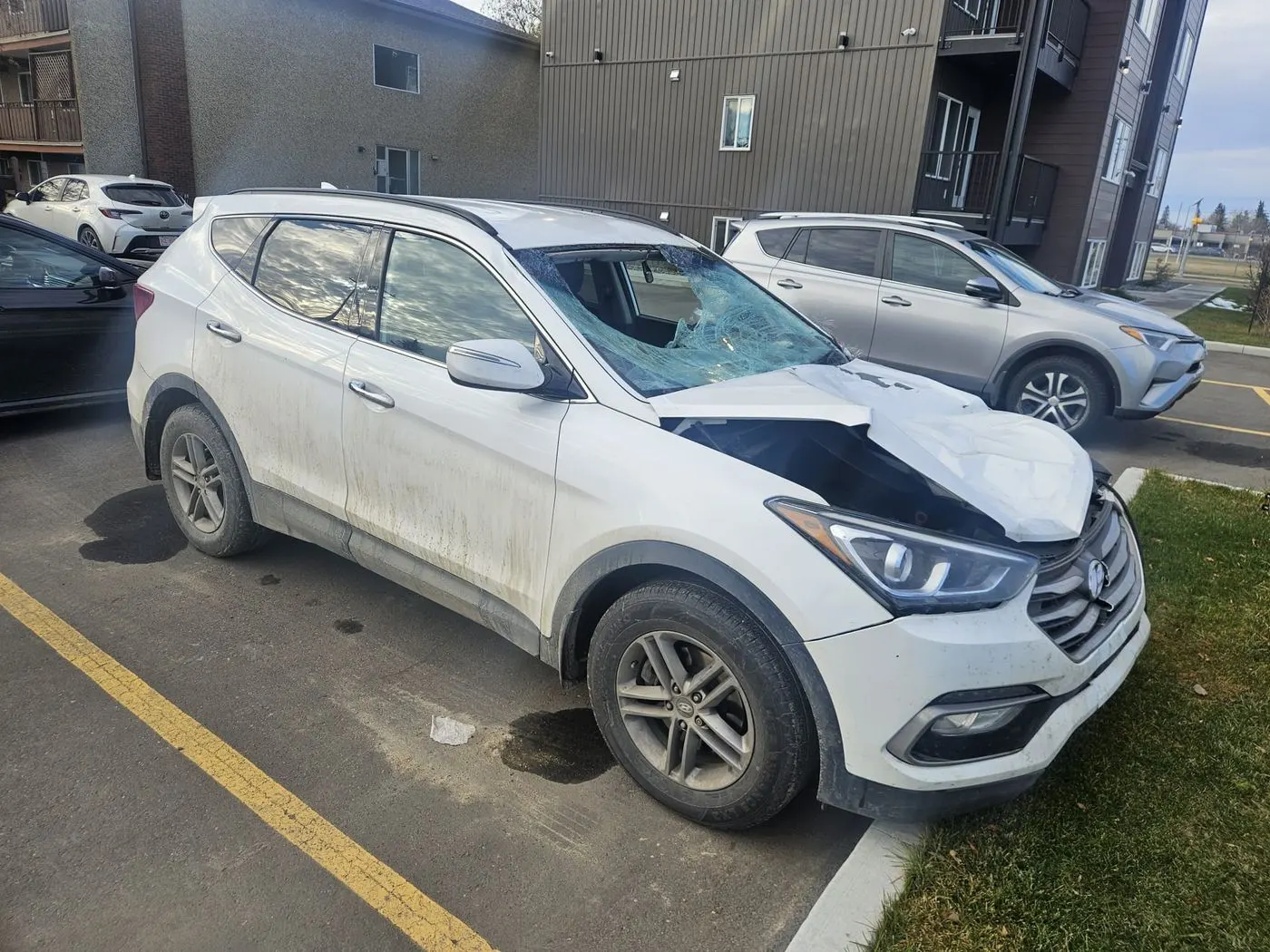
The difference between scrap and salvage cars is that a salvage car can be repaired and returned to the road, while a scrap car is valued only for its metal and parts and will not be driven again. "Salvage" is an official status recorded when an insurer writes off a vehicle. "Scrap" is a description of a vehicle at the end of its life, not an official status. In Alberta, an insurer's write-off produces one of 2 official statuses, salvage or non-repairable, and a repaired salvage vehicle becomes rebuilt.
This guide explains each term, how a vehicle gets each status, how the status affects value, and how to sell each type.
The 4 Terms at a Glance
| Term | Official status in Alberta? | Can it be driven again? | Main source of value |
|---|---|---|---|
| Scrap car | No, a description | No | Metal weight and a few parts |
| Salvage | Yes | Yes, after repairs and a Salvage Vehicle Inspection | Repair potential and parts |
| Rebuilt | Yes | Yes | Used-car value, discounted for history |
| Non-repairable | Yes | No, never | Parts and metal |
What Is a Salvage Car?
A salvage car is a vehicle that an insurer has written off but that can be repaired and made roadworthy again. In Alberta, the insurer records the salvage status. The vehicle cannot be registered while it has that status.
To return a salvage vehicle to the road, the owner must:
- Repair the vehicle using acceptable repair methods.
- Buy a Request for Vehicle Inspection form at an Alberta registry agent.
- Pass a Salvage Vehicle Inspection by a licensed journeyperson technician at a licensed facility. The inspection can take up to 4 hours.
- Register the vehicle within 14 days of the inspection certificate's date.
Once the vehicle passes, its status changes from salvage to rebuilt.
What Is a Rebuilt Car?
A rebuilt car is a former salvage vehicle that has been repaired and has passed a Salvage Vehicle Inspection. It can be registered and driven. The rebuilt status stays with the vehicle for the rest of its life and shows on vehicle history reports. Rebuilt vehicles usually sell for noticeably less than the same model with a clean history.
What Is a Non-Repairable Car?
A non-repairable car is a vehicle so badly damaged that it can never be registered again in Alberta. It can only be sold as scrap or dismantled for parts. Insurers record this status after severe damage, such as major fire, deep flood damage, or a crushed structure. Major components such as the cab, frame, and electronic safety systems from a non-repairable vehicle cannot be used to rebuild another vehicle.
What Is a Scrap Car?
A scrap car is any vehicle at the end of its life whose value comes mostly from its metal. A car can become scrap without any insurance claim. Common scrap cars are rusted-out vehicles, stripped parts cars, and vehicles too old to repair economically. A non-repairable vehicle is a scrap car by definition, but many scrap cars never had a write-off.
In Alberta, selling a vehicle for scrap requires government-issued photo ID under the Scrap Metal Dealers and Recyclers Identification Act, and dealers must record and report the transaction.
How Each Status Affects Value
Value drops in this order: clean history, rebuilt, salvage, non-repairable, scrap.
- Clean history: full used-car value.
- Rebuilt: used-car value, minus a discount for the history.
- Salvage: value depends on how much repair it needs and how valuable the parts are.
- Non-repairable: parts and metal only.
- Scrap: mostly metal weight, plus any usable parts and the catalytic converter.
A salvage vehicle with light damage on a popular model can be worth a fair amount. A non-repairable vehicle of the same model is worth less, since it can never be driven again.
Salvage Yard vs. Scrap Yard
A salvage yard sells used parts from damaged and end-of-life vehicles, while a scrap yard buys metal by weight for recycling. Many businesses do both. Salvage yards care about parts demand, so they pay more for popular models. Scrap yards care about weight and metal type.
How to Sell Each Type
Each type sells best a different way:
- Rebuilt car: sell privately or to a dealer, and disclose the rebuilt status. Not disclosing it can cause legal problems.
- Salvage car: sell to a rebuilder, a salvage buyer, or a cash buyer who prices damaged vehicles.
- Non-repairable car: sell to a parts or scrap buyer.
- Scrap car: sell to a scrap buyer or a cash buyer who includes towing.
Buying a Salvage or Rebuilt Vehicle
If you are on the buying side, salvage and rebuilt vehicles carry 4 risks:
- Hidden damage that was not fully repaired.
- Lower resale value when you sell it later.
- Insurance limits, since some insurers restrict coverage on rebuilt vehicles.
- Financing limits, since some lenders will not finance rebuilt vehicles.
A rebuilt vehicle can be a good deal at the right price with a pre-purchase inspection. Knowing the difference between scrap and salvage cars helps you avoid paying used-car prices for a vehicle that is really worth parts value.
How to Check a Vehicle's Status
Check a vehicle's status with a Vehicle Information Report from an Alberta registry agent, or a vehicle history report. Buyers should check before buying any used vehicle, and sellers should know the status before quoting a price.
Related reading: Sherwood Park cash for cars, all services, cash for cars Edmonton, and all car selling guides.